Bow Shackle vs. Dee Shackle: Which One Should You Choose for Your Lifting Project?
When it comes to lifting, rigging, or lashing, picking the right connector isn’t about preference—it’s about safety and staying compliant. Bow shackles (often called anchor shackles) and dee shackles (chain shackles) may look alike at a glance, but they’re built for completely different loads. Grab the wrong one, and you risk gear fatigue, sudden failure, or an accident on site. Here’s a quick, no-nonsense breakdown of the key differences, so you can choose wisely and work safely.
What is a Bow Shackle?
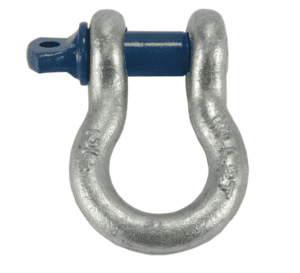
Key points:
- Shape: Rounded (bow shape)
- Also called: Anchor shackle
- Features:
- Larger curve
- Handles multi-directional loads
What is a Dee(D) Shackle?
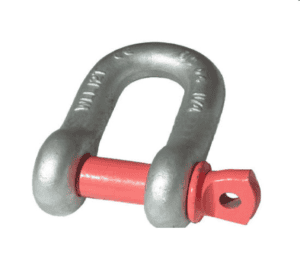
Key points:
- Shape: D-shaped (straight sides)
- Also called: Chain shackle
- Features:
- Designed for straight-line loads
- Higher stability in one direction
Bow Shackle vs Dee Shackle: Key Differences
| Feature | Bow Shackle (e.g., G209 / G2130) | Dee Shackle (e.g., G210 / G2150) |
| Loading Direction | Can handle multi-directional/side loading. | Strictly for in-line (straight) loading. |
| Connection Capacity | Large interior accommodates wide slings or multiple hooks. | Narrow throat designed for single-line chain or wire rope. |
| Side Loading | Reduction in WLL applies, but it is permissible. | Never use for side loading; risk of body twisting. |
| Common Use | Off-road recovery, cranes, multi-leg slings. | Industrial towing, permanent chain links, and tensioning. |
How to Choose the Right Shackle?
When to Use a Bow Shackle
Choose a bow shackle when:
- You are using multi-leg slings
- Load direction may shift or vary
- You need to connect multiple components
- You are working in offshore or dynamic environments
Example:
Lifting heavy equipment with a 2-leg or 4-leg chain sling.
When to Use a Dee Shackle
Choose a Dee shackle when:
- The load is applied in a straight line
- You need a secure, fixed connection
- You are connecting chains or towing systems
Example:
Securing cargo with a direct pulling force or connecting chain assemblies.
Common Mistakes to Avoid
Even experienced users make critical errors when selecting shackles.
Using a Dee Shackle for Side Loading
Dee shackles are not designed for angled loads—this can cause bending or failure.
Overloading Beyond WLL
Ignoring the working load limit significantly increases the risk of accidents.
Improper Pin Selection
Using mismatched or loose pins can compromise the entire connection.
Assuming All Shackles Are the Same
Different standards (US, European) and grades affect performance and safety.
Conclusion: Bow or Dee Shackle?
Both bow shackles and Dee shackles play essential roles in lifting and rigging—but they are not interchangeable.
- Choose a bow shackle for flexibility and multi-directional loads
- Choose a Dee shackle for straight-line strength and stability