Heavy-Duty Securement: A Manufacturer’s Guide to Choosing Tie-Down Straps
When it comes to securing cargo, one size definitely does not fit all. Whether you are hauling heavy machinery across the country or transporting a vintage motorcycle on a trailer, the hardware you choose determines the safety of your load. The two most common tools for the job are Ratchet Straps and Cam Buckle Straps.
But how do you know which one to trust? In this guide, we’ll break down the mechanical differences, load limits, and best-use scenarios from a professional manufacturing perspective.
What Is a Ratchet Strap?
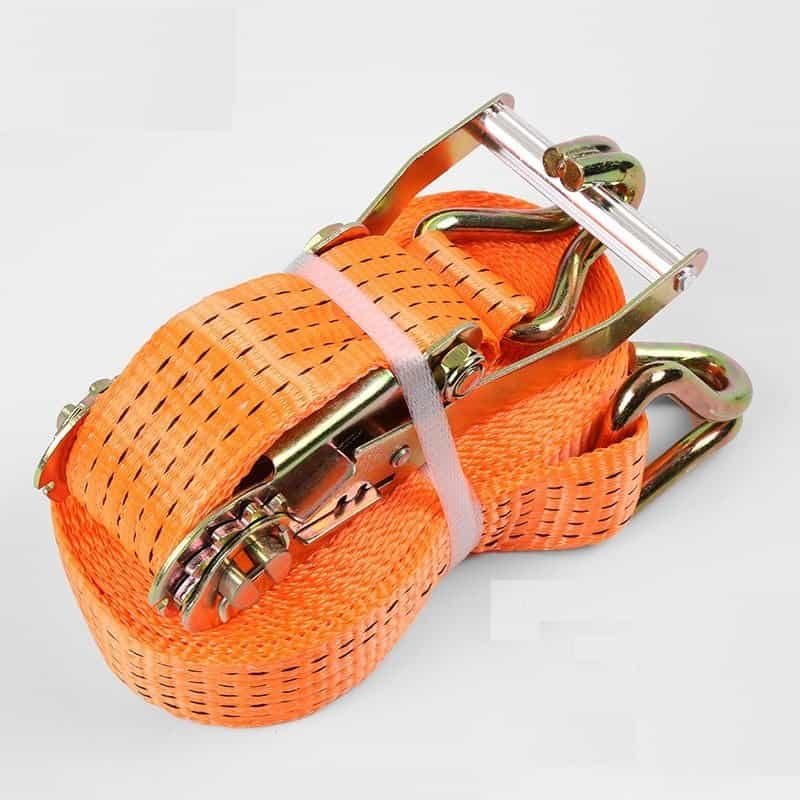
A ratchet strap is a heavy-duty tie-down strap that uses a ratcheting mechanism to tighten webbing and secure cargo. The ratchet handle rotates a gear system, allowing the user to gradually apply high tension to the strap.
This mechanical advantage makes ratchet straps ideal for heavy loads and industrial transportation.
Key Features of Ratchet Straps
- Mechanical ratchet tightening system
- High tension capability
- Strong working load limits (WLL)
- Common widths: 25 mm, 35 mm, 50 mm, 75mm, 100mm
- Often equipped with hooks such as J-hooks, flat hooks, or double J-hooks
Typical Applications
Ratchet straps are commonly used in:
- Truck cargo securement
- Construction material transport
- Machinery and equipment hauling
- Vehicle transportation
- Industrial logistics
Because of their strong tensioning force, ratchet straps are widely used in professional cargo securement systems.
What Is a Cam Buckle Strap?
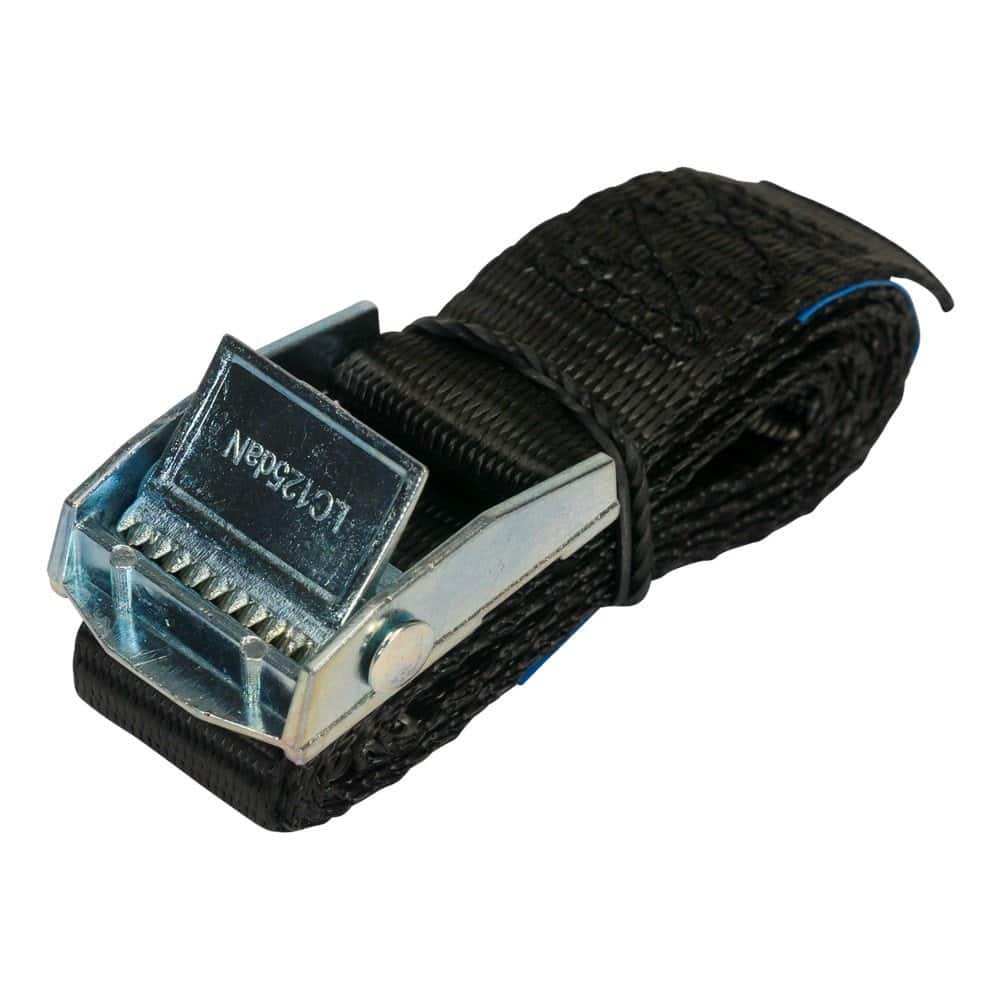
A cam buckle strap is a lightweight tie-down strap that uses a spring-loaded cam buckle to hold tension. Instead of a ratchet handle, the user simply pulls the webbing through the buckle to tighten it.
The cam buckle grips the strap using friction, locking it in place.
Key Features of Cam Buckle Straps
- Simple pull-tight operation
- Lightweight and portable
- Lower tension compared to ratchet straps
- Faster to use and release
- Ideal for lighter loads
Typical Applications
Cam buckle straps are commonly used for:
- Kayaks and canoes
- Bicycles
- Camping gear
- Luggage and outdoor equipment
- Light cargo transportation
Because they apply less tension, cam buckle straps are less likely to damage delicate cargo.
Ratchet Strap vs Cam Buckle Strap: What are the differences?
Although both types of straps serve the same purpose—securing cargo—they differ significantly in design, strength, and applications.
| Feature | Ratchet Strap | Cam Buckle Strap |
|---|---|---|
| Tightening method | Mechanical ratchet | Manual pull |
| Tension level | Very high | Moderate |
| Load capacity | Heavy-duty | Light to medium |
| Ease of use | Moderate | Very easy |
| Risk of cargo damage | Higher if overtightened | Lower |
| Typical applications | Trucks, machinery, heavy cargo | Kayaks, bikes, luggage |
| Hardware weight | Heavier | Lighter |
Application Guide: When to Use Which?
When deciding between a ratchet strap and a cam buckle strap, consider the following factors:
1. Cargo weight
Heavy loads → choose ratchet straps
Light loads → cam buckle straps may be sufficient
2. Cargo fragility
Delicate items → cam buckle straps
3. Transportation distance
Long-distance transport → ratchet straps provide better stability
4. Required tension
If high tension is required to prevent movement, ratchet straps are the better choice.
Conclusion
Choose Ratchet Straps for maximum tension and heavy-duty industrial loads. Opt for Cam Buckle Straps for fast, gentle securing of lightweight or outdoor gear. Selecting the right tool ensures your cargo stays safe and your transport remains reliable.