The Ultimate Guide to Soft Shackles: Safety, Strength, and Why It’s Replacing Steel?
- The Ultimate Guide to Soft Shackles: Safety, Strength, and Why It’s Replacing Steel?
- What Is a Soft Shackle?
- What Materials Are Soft Shackles Made Of?
- Advantages and Limitations of Soft Shackles
- Soft Shackle Usage in 4 Steps
- Soft Shackle Inspection and Maintenance
- How to Choose the Right Soft Shackle?
- Is it Time to Ditch Steel?(Soft Shackle VS. Steel Shackle)
- Conclusion
Soft shackles are becoming increasingly popular in off-road recovery, marine operations, and industrial lifting.
Compared with traditional steel shackles, they are lighter, safer, and more flexible. Made from high-strength synthetic fibers such as UHMWPE or HMPE, soft shackles offer exceptional strength-to-weight ratios while reducing the risk of injury during failure.
What Is a Soft Shackle?
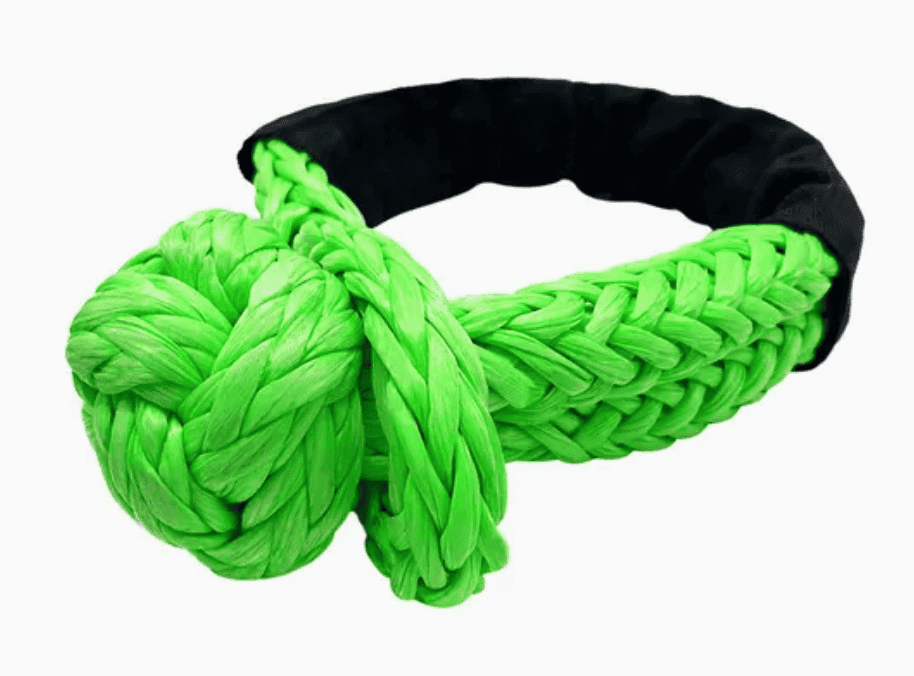
When shackles are no longer heavy. Soft shackles replace steel with braided UHMWPE fiber, consisting of a rope body, an adjustable eye, and a locking knot at the end—with an optional protective sleeve for added abrasion resistance. They deliver the full connecting functionality of metal shackles while achieving extreme lightweight and operational convenience—no wrenches, no corrosion concerns, offering a more efficient solution for modern rope-based operations.
What Materials Are Soft Shackles Made Of?
Most high-quality soft shackles use:
1. UHMWPE / HMPE
Features:
- Extremely high tensile strength
- Very low stretch
- Lightweight
- Excellent fatigue resistance
- Floats on water
- UV resistant
UHMWPE is the most widely used material because it offers an outstanding strength-to-weight ratio.
Polyester Protective Sleeve
Many soft shackles include:
- Polyester abrasion sleeves
- Cordura protective covers
Their purpose is:
- Improve wear resistance
- Reduce friction
- Protect against UV exposure
Advantages and Limitations of Soft Shackles
Soft shackles have become increasingly popular in off-road recovery, marine operations, and industrial rigging because of their lightweight design and excellent strength-to-weight ratio.
However, like any lifting or recovery equipment, they also have limitations. Understanding both the advantages and disadvantages will help users choose the right shackle for their applications.
| Advantages | Limitations |
|---|---|
| Lightweight | Sensitive to sharp edges |
| Safer than steel shackles | Lower heat resistance |
| High strength-to-weight ratio | Requires regular inspection |
| Flexible and versatile | Not suitable for every lifting application |
| Corrosion resistant | May require protective sleeves |
| Floats on water | More expensive than basic steel shackles |
Soft Shackle Usage in 4 Steps
- Check your gear. Run the rope through your fingers to feel for cuts, abrasions, or heat damage. Also make sure the weave is clean—dirt and sand trapped inside can chew through the fibers when loaded.
- Open the loop. Slide the collar back to expose the full eye. Pass it over your recovery anchor—just make sure the anchor point has smooth, rounded edges, not sharp metal that could cut the rope.
- Connect your line. Feed the eye through the loop end of your kinetic rope, snatch strap, or winch line.
- Lock it in place. Push the stopper knot all the way through the opened eye until it pops out the other side. Then pull the body tight so the loop cinches down firmly around the knot’s base. Before you put any real tension on it, give it one last look to confirm the knot is fully seated and won’t back out.
Soft Shackle Inspection and Maintenance
Investing in a rated, professional recovery kit means taking care of the fibers.
- Wash After Use: After dragging your gear through silt, clay, or salt water, wash it in a bucket of clean, fresh water with mild soap. Do not use harsh industrial chemicals.
- Air Dry Only: Keep it away from exhaust pipes or direct heat sources. UV exposure is managed via specialty coatings, but drying your shackle under extreme direct heat can degrade the polymer structural limits.
- Retire When Damaged: If the sacrificial protective sleeve is shredded, replace the sleeve. If the inner 12-strand core rope shows significant cuts or broken strands, retire the shackle immediately.
How to Choose the Right Soft Shackle?
Choose a minimum breaking strength higher than your maximum load.
| Diameter | Breaking Strength |
|---|---|
| 6 mm | 8-10 tons |
| 8 mm | 12-15 tons |
| 10 mm | 18-22 tons |
| 12 mm | 25-35 tons |
Is it Time to Ditch Steel?(Soft Shackle VS. Steel Shackle)
| Feature | Soft Shackle | Steel Shackle |
|---|---|---|
| Material | UHMWPE / HMPE Synthetic Fiber | Forged Alloy Steel |
| Weight | Extremely Lightweight | Heavy |
| Strength-to-Weight Ratio | Excellent | Good |
| Safety During Failure | No metal projectile | Can become a projectile |
| Flexibility | Excellent | Limited |
| Corrosion Resistance | Excellent | May rust without coating |
| Heat Resistance | Limited | Excellent |
| Abrasion Resistance | Moderate | Excellent |
| Marine Applications | Excellent | Good |
| Off-Road Recovery | Excellent | Good |
| Industrial Lifting | Limited / Special Uses | Industry Standard |
| Maintenance | Regular inspection required | Minimal |
Soft Shackles Are Better If You Need:
- Lightweight equipment
- Increased safety
- Corrosion resistance
- Flexibility
- Off-road recovery performance
Steel Shackles Are Better If You Need:
- Maximum abrasion resistance
- High-temperature resistance
- Certified lifting hardware
- Heavy-duty industrial performance
Conclusion
Soft shackles have transformed recovery and rigging by offering a lightweight, safe, and flexible alternative to traditional steel shackles.
Whether you work in off-road recovery, marine operations, or industrial rigging, choosing the right soft shackle can improve efficiency while reducing safety risks.
Understanding the material, strength ratings, limitations, and proper usage will help you maximize performance and service life.